
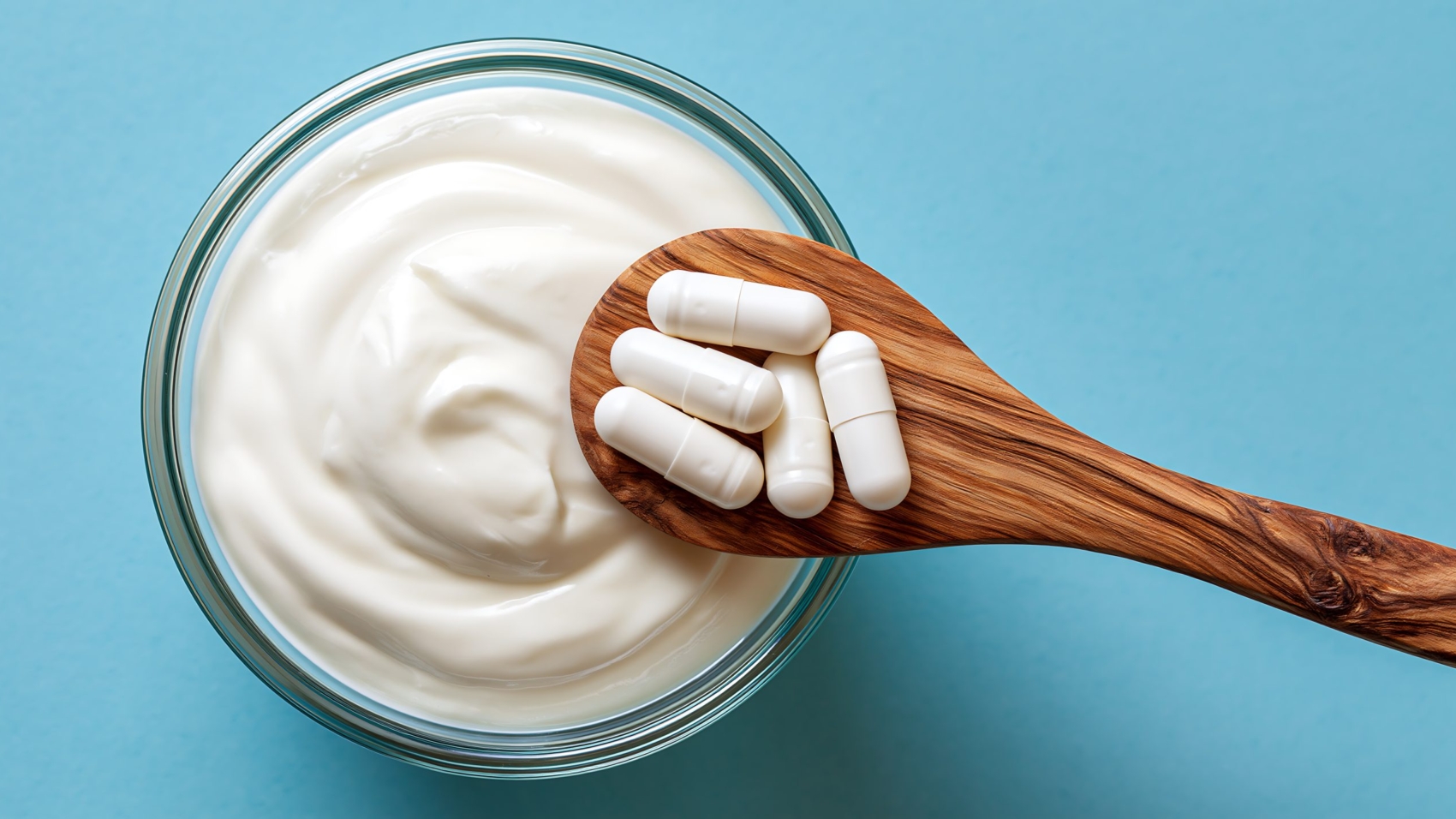
We’re buying probiotic supplements at record rates, but the everyday diet still falls short. Look at the numbers: probiotic supplement usage increased by 786% in people less than 20 years and 287% in people over 20 years (Clinical Gastroenterology and Hepatology). So, there should naturally be an improvement in people’s gut health right? But, that’s not the case.
Dr. Kira Newman, a Clinical Assistant Professor at the University of Michigan, says, “Our findings suggest that people are not making changes to what they eat, even though an increasing number are concerned enough about their microbiome to take a probiotic supplement.”
People care enough about their gut microbiome, but are ignoring what’s on their plates.
Do Probiotics Work?
Probiotics contain live bacterial strains that support gut microbial diversity. But the 1 billion CFU or 10 billion CFU you see on the bottle label isn’t going to be useful to you if you don’t understand the relationship between probiotics and gut microbiome.
Scientists have studied the adult digestive system. They say that over-the-counter probiotic pills cannot permanently repopulate your gut.
Gut has defensive barriers: Your gut microbiome has natural diversity that doesn’t easily allow outside organisms.
Competition for resources: There’s already a large number of native bacteria in your gut. When you take probiotic pills, the temporary new bacteria often compete for resources.
Settling down permanently doesn’t happen quickly: The new probiotics from your pills are helpful when they are active, but they don’t settle down permanently unless your gut microbiome supports it.
Supplement manufacturing impact: Probiotics contain live microbial strains. The formulation integrity affects how much live bacterial strains that you get when you take your pill that has been sitting in a warehouse, transported in sub-optimal conditions, and stored on your countertop.
Formulation matters: A recent study in Biotechnology Advances outlines raw probiotics that are exposed to stomach acid may get degraded quickly before they become useful. Modern formulations like multi-coated microparticles using alginate, chitosan, and pectin may support targeted, delayed release in the small intestines.
Can Everyone Eat Fermented Foods for Probiotics?
Another common advice for probiotics is to eat fermented foods like yogurt, kombucha, kefir, kimchi, or other similar ones. But, when you ask people who have eaten it, some may not like the strong taste, some may feel bloating, or have other digestive discomfort when taking those foods. While your body takes some time to adjust new probiotics coming from fermented foods, there could also be other reasons:
Natural compounds called biogenic amines (like histamine) are present in fermented foods. For someone with sensitivities, eating fermented foods can cause uncomfortable symptoms.
Ferments can also contain heavy, hard-to-digest carbohydrates (FODMAPs) that feed bacteria. Those following a low FODMAP diet may find it challenging to add these kinds of foods.
Someone who’s already dealing with sensitive stomachs can’t simply eat fermented foods that can trigger their digestive conditions
So, what can you do? The smart way to include probiotics is to understand how to take them while supporting the whole gut microbiome.
How to Build Gut Health with a Microbiome-Supportive Diet?
Fix your lifestyle first. Avoid smoking and alcohol. Clean up your diet to avoid processed foods and sugary foods. Once you’ve reduced consumption that negatively affects gut microbiome, you can update your habits to support it.
Eat more plants: Diets that contain the most fiber, fruit, and vegetables are known to support the most variety and richness of bacteria in the gut. Healthy bacteria produce supportive short-chain fatty acids, such as n-butyrate. Plant-based foods provide prebiotics that support the bacterial colony in your gut.
Take more fiber: Only 5% of Americans consume the recommended amounts of daily fiber (21-38 g per day, depending on sex and age), as the average daily American intake is only 16.2 g. Not just fruits and vegetables, but whole grains also provide fiber. See the food labels to find out the total carbohydrate-to-fiber ratio. A ratio of less than 10 is good, and a ratio of less than 5 is ideal. For example, if a serving of cereal has 20 g of total carbohydrates and 4 g of fiber, this ratio would be 20/4=5; this would be an excellent choice.
Use probiotics that you need: You can find probiotic supplements with different types of strains. Consult with a healthcare provider who can assess your gut microbial diversity and suggest targeted probiotics that can be useful for your daily lifestyle. They can also help you understand the dosage you need. Some experts argue that once a healthy gut ecosystem is established, there’s little use of probiotics. But some others say that probiotics can be useful to continuously support a gut microbiome. The focus should always be on improving the whole ecosystem so that you don’t stay dependent on a pill for a healthy gut.
Stay active: Exercise and physical activity can help your gut, too, and not only by supporting a healthy weight. A meta-analysis that included 16 studies of older adults found that exercise supports richness and diversity of gut microbes.
Get more sleep: A study of 6941 participants from the Lifelines Dutch Microbiome Project was published in Nature Communications (2026). They found an association between lower microbiome diversity and poor quality of sleep. When you have an erratic sleep routine or are sleep-deprived, it changes microbial rhythms in your gut, changing their populations.
Stress management: A human cohort study explains that psychological stress changes your gut bacteria very similarly to what you eat and even your genetics. They noticed 5% differences in the microbiome related to stressful events. Simple techniques like box breathing for 2 minutes and saying no to screen 30 minutes before bedtime can be helpful to manage everyday stress.
Takeaway
Probiotics are helpful supplements to support gut microbial diversity. But they aren’t the only solution to optimize gut health. They can be included as a part of a broader strategy to make changes to lifestyle to support gut microbiome. It involves saying no to unhealthy processed foods and saying yes to more plant-based and whole grain foods that also provide fiber. Being mindful of what you eat by checking the labels before adding them to your shopping cart can help you support gut health naturally. If necessary, you can discuss with your healthcare practitioner about probiotic usage, its suitability, and dosage that’s tailored for your specific needs.
Disclaimer: This article is for informational purposes only and does not constitute medical advice. Always consult your healthcare provider or a registered dietitian before making significant changes to your diet or starting any new supplement.